
How Generative AI Is Transforming Patent Drafting, Part 1
AI-assisted drafting: first drafts, claim language, and prior-art research.
Introduction
Generative artificial intelligence (GenAI) is rapidly transforming industries that rely on knowledge-intensive work, from software development and healthcare to finance and legal services. One such industry is innovation and patents. Patent drafting was once regarded as one of the most time-consuming and meticulous tasks in innovation management. It is now being reshaped by AI systems capable of generating accurate technical descriptions, suggesting litigation-proof claims, summarizing inventions, and assisting with prior-art research in a matter of minutes.
For decades, preparing a high-quality patent application required extensive collaboration between inventors and patent professionals. Attorneys would spend hours understanding the invention, researching existing technologies, drafting detailed specifications, refining claims, and ensuring the application complied with strict legal requirements. Today, however, generative AI can automate many of these routine tasks, significantly reducing drafting time. However, speed alone does not guarantee quality. Patent applications require precision, strategic thinking, and legal judgment, where human expertise remains indispensable. The growing adoption of AI in patent practice has also sparked important discussions about inventorship, confidentiality, ethical use, and professional responsibility.
Can AI-generated content be trusted? How should confidential invention disclosures be handled? Can AI eventually replace patent attorneys, patent examiners, and even inventors?
This two-part article explores the answers to these questions by discussing how generative AI is changing patent drafting, from AI-assisted writing and semantic prior-art searching to the legal and ethical challenges that accompany these advancements. It also examines why, despite remarkable technological progress, human expertise continues to play a key role in securing strong and enforceable patent protection. This first part covers AI-assisted drafting and prior-art search; Part 2 turns to inventorship and the future of the profession.
Generative AI in Patent Drafting
Patent drafting has long been regarded as one of the most specialized tasks in the intellectual property ecosystem. A patent document is unlike any other technical document; it is both a legal and a technical instrument. It describes an invention in sufficient detail to enable a person skilled in the relevant field to reproduce it while simultaneously defining the legal boundaries of the invention through its claims. A poorly drafted patent can weaken protection, lead to litigation challenges, or, even before that, be rejected by the patent office itself.
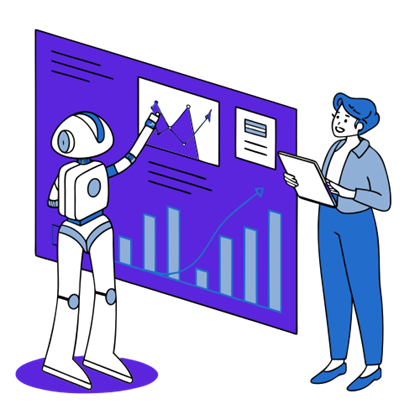
Traditionally, the patent drafting process began with a detailed invention disclosure prepared by the inventor. Patent attorneys or agents would then conduct multiple interviews to understand the invention's novelty, technical features, potential applications, and commercial significance. This was followed by an extensive prior-art search to identify existing patents, scientific publications, and other publicly available information that could affect the invention's patentability.
Once sufficient background information had been gathered, the drafting process involved preparing the various sections of the patent application, including the title, background, summary, detailed description, drawings, abstract, and claims. Each section required careful selection of words to satisfy legal requirements while ensuring consistency throughout the document. Claims, in particular, demanded considerable expertise, because even subtle changes in language could significantly alter the scope of the invention.
With the advent of generative AI, many of the repetitive and time-consuming aspects of patent drafting can be completed in minutes. AI tools are reshaping how patent professionals work, allowing them to focus more on strategic analysis and legal decision-making.
Where Generative AI Fits into Patent Drafting
Generative AI has not yet replaced the patent drafting process entirely; rather, it has enhanced it by automating repetitive and less judgment-intensive tasks. Modern large language models (LLMs) can analyze and summarize technical disclosures, generate coherent patent specifications, suggest claim language, and assist with prior-art searches. However, the ultimate responsibility for the quality, legal validity, and decision to file a patent application remains with patent professionals.

First-Draft Generation
One of the most significant applications of generative AI is the creation of an initial patent draft. This stage of patent drafting often consumed several hours, particularly for complex technologies.
Today, an inventor can provide an AI system with a detailed invention disclosure, technical specifications, research notes, or even presentation slides. Based on this input, the AI can generate a structured draft containing key sections such as:
● Title of the invention
● Technical field
● Background of the invention
● Summary
● Detailed description
● Example embodiments
● Abstract
This capability accelerates the drafting process while allowing attorneys to spend more time improving the legal and technical quality of the application.
Claim Drafting Assistance
The claims define the legal scope of a patent and are the most critical part of a patent application. Drafting effective claims requires careful consideration of novelty, inventive step, prior art, and potential infringement scenarios.
Generative AI assists by suggesting different claim formats and identifying alternative ways to describe the invention. Based on the disclosed features, AI can generate independent claims, dependent claims, method claims, system claims, and computer-readable medium claims, along with alternative claim wordings at varying levels of specificity.
Improving Language Quality and Consistency
Patent applications demand precise, consistent, and unambiguous language to prevent uncertainty during examination or later litigation. Generative AI is particularly effective at improving document quality by:
● Standardizing terminology throughout the application
● Correcting grammatical and stylistic inconsistencies
● Simplifying unnecessarily complex sentences
● Expanding brief technical descriptions into more comprehensive explanations
● Ensuring consistent references between figures, embodiments, and claims
Summarization and Knowledge Extraction
Inventors often provide information in the form of lengthy technical reports, laboratory notebooks, research papers, or presentation slides. Reviewing and organizing this material manually can be time-consuming.
Generative AI can rapidly summarize large volumes of technical information, identify the invention's key features, extract important technical concepts, and organize them into a coherent narrative suitable for understanding.
This capability is especially valuable in research-intensive fields such as biotechnology, pharmaceuticals, semiconductor engineering, and artificial intelligence, where invention disclosures may span hundreds of pages of supporting documentation.
Part 2 of this article turns to how generative AI is changing prior-art search, the unresolved question of AI inventorship, and what a human-AI partnership in patent drafting is likely to look like going forward.


Comments