
AI Titans: How ChatGPT, Gemini, Perplexity & Grok Evolved and What Their Patents Reveal
1. INTRODUCTION: THE AGE OF TALKING MACHINES
There was a time when AI assistants meant convincing Siri to set an alarm without accidentally calling your neighbor. The bar was low, expectations were modest, and most smart assistants could not hold a conversation longer than five seconds without losing track. Now we have AI models that write production grade code, summarize lawsuits, analyze patents, predict trends, simulate arguments, and even explain memes with surprising emotional accuracy.
These systems do more than respond. They reason, interpret, and adapt. They read documents across formats, switch between languages mid-sentence, recognize objects in images, and generate audio that can sound convincingly human. Behind these capabilities sits a world of technical complexity. Massive training datasets, transformer-based architectures, multimodal encoders, retrieval augmented pipelines, and a growing collection of patents that protect how these systems work.
ChatGPT, Gemini, Perplexity, and Grok are not just AIs. They are fully developed ecosystems shaped by patents, data access, hardware design, and model architecture. Each platform has evolved along a different path, influenced by engineering choices, legal strategy, and business positioning.
In 2025 the AI landscape feels like a mix of Formula 1 engineering, chess level planning, and at times a bit of reality show unpredictability. This is the age of talking machines, systems that do not simply process language but actively participate in it.
2. EVOLUTION OF THE AI GIANTS
2.1 ChatGPT: The Polite Overachiever
ChatGPT began with GPT 3.5 in 2022. A friendly chatbot that wrote poems and answered questions in a cheerful but limited way.
Then the evolution accelerated.
Model Version | Year | Key Advancement |
GPT-4 | 2023 | Major leap in reasoning stability and reliability |
GPT-4o | 2024 | First truly multimodal model with unified text, image, and audio understanding |
GPT-4.1 / GPT-5 | 2025 | Massive context expansion and introduction of agent-style workflows |
2.1.1 Key OpenAI patents that shaped this evolution:
US 12,039,431B1 for multimodal interaction systems: This patent covers how a single model can take inputs from different media such as text, images, and audio and process them in a unified workflow. It describes the internal routing logic that decides which transformer components should handle each input type. This is important because GPT 4o depends on the seamless combination of these modalities to understand and generate rich content.
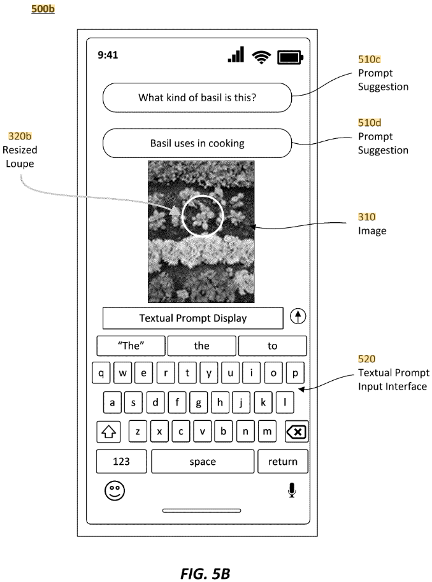
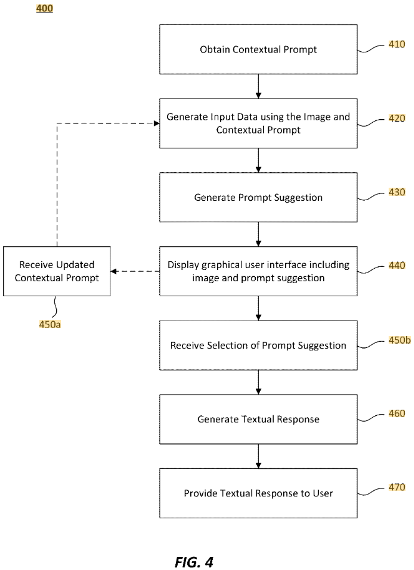
OpenAI’s US 12,039,431B1 patent
US 12,051,205B1 for LLM interaction orchestration: This patent explains how the model manages complex user sessions, including follow up questions, multi-step reasoning, and tool invocation. It outlines a system where the LLM can coordinate several internal processes to maintain context over long interactions. This is relevant for GPT 4.1 and GPT 5 because they support agent style tasks that require structured orchestration rather than simple prompt in and answer out patterns.

OpenAI’s US 12,051,205B1 patent
US 12,008,341B2 for machine learning assisted code authoring: This patent describes techniques for assisting with code generation, code correction, and code explanation by combining language modeling with specialized programming logic. It defines methods for analyzing user intent in code queries and producing structured code outputs. This is directly related to ChatGPT’s strong performance in coding and debugging workflows.
These patents protect the interfaces and workflows around the model, not just the model weight files. They create a legal perimeter around how multimodal inputs are handled, how multi step conversations are managed, and how code generation is performed. ChatGPT now feels like the polite overachiever who signs up for every subject and somehow tops all of them.

OpenAI’s US 12,008,341B2 patent
2.2 Google Gemini: The Multimodal Scholar
Google’s path to Gemini ran through LaMDA, PaLM, and Bard, a rotating cast of experimental heroes that felt like different phases of a Marvel storyline. Gemini was the point where the plot came together, and the universe finally aligned.
Model Version | Year | Key Advancement |
Gemini 1.0 → 1.5 | 2023–2024 | Introduced large context windows and native multimodality |
Gemini 3 Pro | 2025 | Added video understanding, audio analysis, document reasoning, and improved logical consistency |
2.2.1 Key Google patent that shaped this evolution:
US 10,452,978 B2 known as the Transformer Patent: This patent explains the attention based neural network structure that enables modern language models to understand relationships between different tokens in a sequence. It introduced the concept of self-attention, which allows models to process long contexts more efficiently than earlier recurrent architectures. This is the foundation of nearly all current large language models and directly influences the architecture used in Gemini.
Since every major AI system relies on a Transformer style structure, this patent gives Google a powerful intellectual property position. It supports Gemini’s ability to reason over long inputs and to integrate text, images, audio, and video within one architecture.
This makes Gemini feel like that student who walks into an exam without notes and still scores top marks because they invented the syllabus.

Google’s US 10,452,978B2 patent known as the Transformer Patent
2.3 Perplexity: The Answer Engine That Grew Up Fast
Perplexity started as a fast answer engine with clean citations. Over time it evolved into a research assistant that can ingest PDFs, interpret images, and provide real time web linked responses.
• Real time search combined with LLM reasoning• Support for files, images, documents, and scientific papers• Introduction of Perplexity Patents for IP focused research tasks
2.3.1 Intellectual property posture for Perplexity
Perplexity does not rely on a large or public foundational patent portfolio. Instead, it focuses on product design, retrieval logic, and user experience. Most of its strength comes from retrieval augmented generation, ranking algorithms, and integration with licensed foundation models.
This approach keeps the platform agile. However, it also makes Perplexity more sensitive to copyright disputes and data access regulations. The ongoing lawsuits, including Britannica versus Perplexity, where Britannica claims that Perplexity reproduced copyrighted text and diagrams without permission and accessed paywalled material during retrieval. This case will influence how Perplexity designs its crawling systems, caching methods, and citation workflows because the court must decide whether an answer engine can rely on dynamic web content without individual licensing. The outcome may reshape Perplexity’s data pipelines and force new compliance frameworks for AI assisted search.
Perplexity is similar to a racing car that optimizes speed and handling rather than engine ownership. It wins through efficiency rather than heavy patent firepower.
2.4 Grok: The Real-Time Oracle
Grok is the rebel member of the AI family sarcastic, fast, and always online. Grok, developed by xAI, is built to keep up with global conversations as they unfold on X. It blends personality with speed and contextual awareness.
Model Version | Key Advancement |
Grok 1 | Introduced the witty, informal, personality-driven conversational style |
Grok 1.5V | Added visual understanding and image interpretation capabilities |
Grok 3 | Improved reasoning, enhanced image analysis, and real-time context awareness |
2.4.1 xAI intellectual property strategy
xAI does not rely heavily on published patents. Instead, it uses trade secrets, proprietary training methods, and exclusive access to the real time data stream from X. This access provides a unique advantage because it allows Grok to interpret breaking news, current conversations, and social signals that other models cannot see.
xAI also invests in trademark protection for the Grok and xAI brands. This strengthens identity and market presence, even without extensive patent filings. Their competitive moat comes from speed, data exclusivity, and internal infrastructure rather than architectural patents.
Grok feels like the reporter who is always in the middle of the action and who never misses a story.
3. Comparison of Models: Intelligence, Performance & Price - The Real AI Face-Off
Now that we’ve met our AI characters, the overachiever (ChatGPT), the scholar (Gemini), the speedster (Perplexity), and the real-time gossip oracle (Grok), let’s talk performance.
Because at the end of the day, fun personalities aside, the real question every professional quietly screams is: “Which model actually works best for my use case?”
3.1 Intelligence & Reasoning: Who’s the Smartest in the Room?
The first battlefield is intelligence and reasoning. If the conversation is about pure cognitive power, structured thinking, coding fluency or multi-step logic, ChatGPT, particularly the GPT-4.1 and GPT-5 era models, still hold the lead. These models benefit from OpenAI’s protected interaction frameworks, including patents such as US 12,039,431 and US 12,051,205, which describe how multimodal inputs and multi-layered reasoning flows are orchestrated. This architecture gives ChatGPT a style of intelligence that feels consistently ordered, logically progressive and unusually resilient in long reasoning chains.
Gemini, however, brings another dimension of intelligence into the room. Thanks to Google’s Transformer patent, US 10,452,978, Gemini possesses a level of multimodal intelligence that excels when the task involves images, diagrams, audio recordings, scientific papers or video content. If ChatGPT is the best analytic thinker, Gemini is the best researcher who can read, listen and watch simultaneously.
Perplexity, by contrast, is not built as a philosopher. Its intelligence comes from retrieval systems and ranking algorithms that allow it to react to the world faster than traditional LLMs. It is exceptionally good at fact accuracy and citation-heavy responses, behaving almost like a hybrid between an LLM and a search engine.
Grok’s intelligence is situational and cultural. It is most impressive when the question relates to real-time trends, social data or unfolding events. Unlike the others, Grok’s strength comes from continuous access to X’s live data streams, a competitive advantage that does not depend on patents but on exclusive data infrastructure.
Requirement | Best Model | Why It Fits |
Reasoning, structured thinking, long chain logic | ChatGPT | Strongest in multi-step reasoning and analytical stability |
Multimodal scientific intelligence across text, images, audio, video | Gemini | Excels in complex technical and research oriented multimodal tasks |
Real time facts, citations, live web backed responses | Perplexity | Designed as an answer engine with retrieval first architecture |
Real time cultural awareness and social pulse | Grok | Reads the internet’s heartbeat through X data and fast inference |
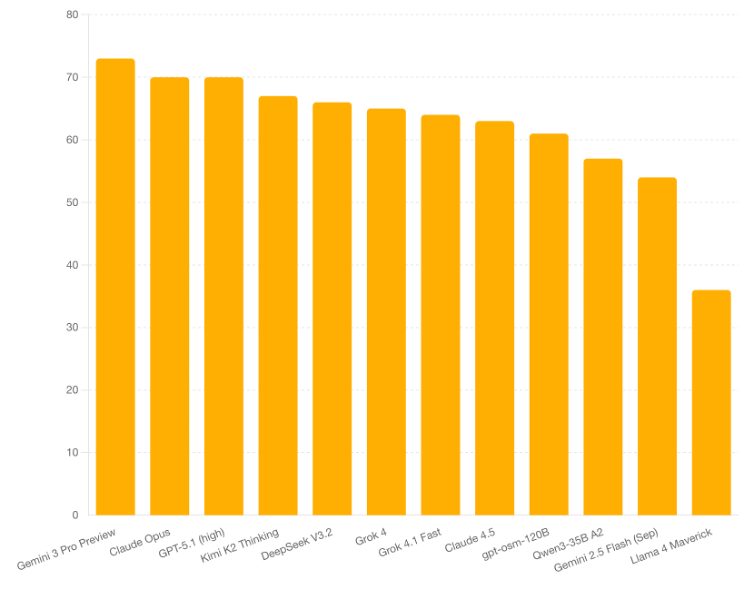
Figure 6. Intelligence ranking of major AI models based on the Artificial Analysis Intelligence Index
3.2 Speed & Output Latency: Who Responds Like a Jet Engine?
When deadlines are burning and coffee is dying, only one question matters: which AI answers before your patience expires.
Speed tells a different story and quite frankly changes the entire user experience, especially in research and enterprise work. Perplexity is the fastest model in practical usage. It often answers before other models have begun generating, because its engine offloads much of the work to retrieval pipelines that filter the search space before the LLM even begins thinking. Grok is also remarkably fast, optimized to keep up with high-velocity social information. ChatGPT has become significantly faster with the GPT-4o and 4.1 generation, but it still prioritizes reasoning quality over raw speed. Gemini, while deeply intelligent, takes its time. When it analyses a PDF or a video frame, it behaves like a researcher who pauses, observes, and then gives a polished answer rather than a rushed one.
Model | Speed Profile | Why It Performs This Way |
Perplexity | Fastest in real world usage | Retrieval first architecture offloads heavy reasoning to search indexes |
Grok | Very fast | Built on xAI’s low latency inference stack tuned for real time social data |
ChatGPT 4o / 4.1 | Fast and smooth | Major engine overhaul compared to GPT 4, optimized for conversational speed |
Gemini | Deliberate but thoughtful | Processes documents, images and video frames carefully before answering |
Fun fact: Perplexity’s architecture often pairs an LLM with retrieval indexes so fast they essentially bypass traditional token generation bottlenecks. It’s the AI equivalent of teleportation.
3.3 Context Window: Who Remembers an Entire Textbook Without Crying?
Welcome to the era where AIs remember entire books, while humans still forget why they walked into a room.
Memory capacity, or context window length, is where 2025 models have radically transformed expectations. Gemini 1.5 Pro and Gemini 3 Pro offer context windows that stretch into the million-token range, allowing them to process entire books, litigation bundles or scientific datasets in a single pass. ChatGPT 4.1 provides a similar scale of memory with its own million-token context window. This has enormous implications for patent professionals, legal analysts, medical researchers and developers working with dense documentation. Perplexity approaches the memory problem differently. Instead of relying solely on huge context windows, it uses retrieval-augmented generation, pulling only the most relevant parts of large documents rather than ingesting them whole. Grok has enough memory for robust reasoning and live context, but it is not positioned as a long-document model.
Model | Memory Capacity | How It Works in Practice |
Gemini 1.5 Pro / Gemini 3 Pro | Up to 1,000,000+ tokens | Ideal for reading entire books, lawsuits, research archives, or multi-document workflows |
ChatGPT 4.1 | ~1,000,000 tokens | Excellent for long form reasoning, codebases, technical manuals, and patent corpuses |
Perplexity | Hybrid RAG instead of giant context window | Retrieves only relevant sections, making it cost efficient and extremely scalable |
Grok | Moderate context window | Built for real time conversations, not long document ingestion |
This matters for:
· Patent landscapes
· Large contracts
· Technical manuals
· Scientific research
· Codebases
3.4 Price & Cost Efficiency: Who Saves Your Wallet While Saving Your Time?
Greatness is cool, but greatness that doesn’t destroy your wallet is the real artificial intelligence.
The topic of pricing creates yet another reshuffling of the leaderboard. OpenAI changed the industry landscape by offering GPT-4o at prices far below what GPT-4 once cost, creating the best price-to-performance ratio for general users and enterprises. Higher-tier models such as GPT-4.1 and GPT-5 are priced for advanced workflows, agent execution and enterprise integration. Gemini’s pricing is competitive for multimodal workloads, and its Pro tier is generally considered excellent value for researchers. Perplexity provides one of the most cost-efficient offerings for analysts and investigators because its subscription unlocks both LLM capabilities and an extremely capable search engine at once. Grok’s pricing is tied to X’s Premium ecosystem. It is cost-effective for users already within that platform but not necessarily for those who are not tied to X’s environment.
2025 pricing reality:
Model | Pricing Position | What It Means for Users |
ChatGPT 4o | Best price-performance | Delivers high capability at one of the lowest cost-per-token rates |
ChatGPT 4.1 / GPT-5 | Premium tier | Designed for enterprise workflows, agents, and complex reasoning tasks |
Gemini Pro | Competitive | Cheaper than older Ultra tiers, strong value for multimodal research |
Perplexity Pro | Budget-friendly powerhouse | One subscription unlocks fast search plus an LLM, ideal for analysts |
Grok | Platform-tied pricing | Best value only if you already subscribe to X Premium+ |

Price in USD per 1M token of major AI models based on the Artificial Analysis Intelligence Index
3.5 The Patent Analyst’s Toolkit
Patent research analysts live in a world where the documents are long, the claims are longer, and the deadlines are somehow always yesterday. In that environment, AI stops being a novelty and becomes survival gear. Each of the major AI models brings a different superpower to the patent workflow, and the real magic comes from knowing which one to call on for which crisis. ChatGPT, for instance, behaves like the colleague who enjoys dissecting claim language and walking through every limitation with monk-like discipline. Gemini, by contrast, is the multimodal prodigy that can read your PDF, understand your flowchart, and interpret your figure labels all in one breath. Perplexity is the one you ask when you need fast, citation-backed leads for prior art or market intel, and Grok keeps you plugged into real-time competitive signals that shape the context around patent filings.
Together, these systems quietly fill the gaps analysts used to navigate manually. Claim charts suddenly become cleaner. Prior art searches begin with sharper direction. Portfolio analysis gains speed because the AI can ingest massive document sets in one pass. Even ambiguous technical descriptions feel less threatening when you have a multimodal model that can “see” the structure being described. And when your manager asks, “Has Company X done anything in this space recently?” Grok’s real-time feed means your answer arrives before the meeting even starts.
In other words, AI doesn’t replace the patent analyst it amplifies one. ChatGPT helps you think, Gemini helps you see, Perplexity helps you find, and Grok helps you predict. What used to take a team now becomes a coordinated workflow where the analyst becomes the conductor, and the models become the orchestra. The real advantage comes not from choosing one model, but from knowing when to switch instruments.
Which AI Titan Actually Helps You Survive the Job?
Task | Best AI Model | Why |
Claim interpretation, element breakdown | ChatGPT | Best long-form reasoning and structured analysis |
Prior art across PDFs, images, diagrams | Gemini | True multimodal understanding |
Quick prior art leads, factual recall | Perplexity | Fastest citation-backed retrieval |
Competitive intelligence, company moves | Grok | Real-time social signal processing |
3.6 The Balanced Verdict: The Real-World Winner Depends on YOU
Putting all these factors together, the comparison reveals a balanced but highly differentiated landscape. ChatGPT remains the strongest all-purpose intelligence system, supported by its patented reasoning frameworks and deep general knowledge. Gemini is the superior multimodal researcher, powered by the Transformer architecture and Google’s extensive technological ecosystem. Perplexity dominates in real-time factual accuracy, citation depth and speed, an advantage born from retrieval infrastructure rather than proprietary LLM patents. Grok stands out as the model with the best cultural and real-time situational awareness because of its access to X’s live information flow.
Each model becomes the “best” only within the domain it was built to conquer. ChatGPT wins the intellectual olympics. Gemini wins the scientific triathlon. Perplexity wins the speed competition. Grok wins the real-time awareness challenge. In other words, there is no universal champion because each system plays a different sport. The real skill lies in choosing the right AI for the right moment, the way you choose a playlist that fits a particular mood.
4. Conclusion

And so, we arrive at the real revelation hidden beneath all the benchmarks, patents and performance charts. The future of AI isn’t a single-model monopoly; it’s an ecosystem of complementary strengths. These platforms are no longer competing to do the same task better. Instead, they are evolving into specialists, each carving out its own territory in the digital landscape.
What truly matters now is not which model is the “smartest” in a vacuum, but which model aligns with the shape of your work. Patent researchers, analysts, engineers, lawyers, creators, journalists each profession naturally gravitates toward the AI whose architecture, memory capacity, multimodal depth or speed mirrors its own workflow. In that sense, choosing the right AI becomes less like selecting a tool and more like selecting a colleague: the one whose abilities complement your own.
As the industry continues moving toward agentic systems, massive context windows, and more sophisticated multimodal reasoning, the distinctions between these platforms will only sharpen. Patents like Google’s Transformer foundation or OpenAI’s multimodal interaction frameworks will continue shaping the competitive terrain, while companies like Perplexity and xAI prove that speed, data access, and innovation outside the patent arena can be just as powerful.
The future will not be defined by a single dominant AI, but by how intelligently we combine them. The real competitive advantage will go to the people and organizations who understand which model to call upon for which mission. Use ChatGPT when you need a strategist, use Gemini when you need a researcher, use Perplexity when you need answers fast, and use Grok when you need a pulse on the world’s conversation in real time.
In the end, the winner isn’t any one platform.The winner is the user who knows how to conduct the orchestra.
References


good
AI tools have changed surprisingly fast, and I notice it most in the little everyday searches I now handle differently. I’ve used ChatGPT and Perplexity for research, Gemini for quick comparisons, and simple practical lookups like finding an SCI phone number when I need contact information. What interests me most is how each platform seems to be developing its own personality and strengths rather than becoming identical. The patent angle makes the evolution even more interesting because it shows where companies may be heading next. For regular users, that competition can mean smarter, faster, and more useful tools over time.